Untitled Poem

In June 1914 a telegram was sent,

It read: Germany. War. Act Now,

And so young men went,

To die on bloody fields through sun and snow.


Boys suffocated in bloody mud,

Shells and bullets ripped soft flesh apart,

Sat in trenches, listening for that gentle thud,

For years of war that did not need to start.


Four years later after shell-shock, trench foot and death,

Millions had died; towns without young men,

Then on the Eleventh Hour, of the Eleventh Day, of the Eleventh Month,

The bells of peace sounded; soldiers’ whispering “amen”.


A hundred years on since World War One,

A hundred years on since the lowering of the bayonet,

A hundred years on from hell’s fire, some had outrun,

Lest we forget.


Those terrible years after the Treaty of Versailles,

Germany paid a hard price for war,

And yet they warn; no eye for an eye,

Such destruction they could not have foresaw.


And from the desperation, the fear,

A man offered some tainted hope,

Words of hate, explained the loss so clear,

He came to power; Adolf, the man, the “joke”.


Peace for twenty years,

Then War was declared,

Mothers had to hide their fears,

Brave soldiers must not be scared.


Six years this time; more blood-soaked tears,

Death camps, and hateful ideology;

Six million Jews murdered, over years,

All for the glory of some insane mythology.


Once again young men, and women died,

Bravely sacrificing life, without regret,

Men, women and children gassed alive,

Lest we forget.


Peace…to the chimes of Big Ben,

Songs, streamers and smiles,

The world said, “Never Again”,

Peace in unity, with Nazis’ on trials.


In the wake of destruction, a new alliance formed,

Six nations; from the ashes rose the EU,

Sacrifice immortalised, in Europe transformed,

A hundred years on, we will never forget you.
 

milos-tonchevski-304529-unsplash

Humanitarianism comes-a-knocking

India’s Judicial changes to discriminatory and archaic laws in recent weeks are a stark contrast from centuries of inequality. These include decriminalising adultery and homosexuality, in their courts. Such changes to social acceptance, are further supported by the progressive move to offer 500 million of the poorest people free health care. These rapid modernisations of equality laws and healthcare may tie in with India’s ever-growing economy and stance on the world stage. It also reflects the importance of inclusive social policy, equality and health care in relation to the UK’s potential departure from the European Union, and what effect this will have on our human rights and NHS.


Recently, India’s top court overruled the 158-year-old colonial law on adultery; which allowed women to be treated like property by men. The law on adultery allowed men to be prosecuted for having sex with a married woman, without her husband’s permission. This is an archaic piece of law, which had to be overruled for India to progress socially, and thus economically. Whilst it seems shocking to still have such a law actively imposed until recent times, it can be compared to the English case of R v R [1991] UKHL 12. In R v R the House of Lords overruled outdated common law on rape within marriage. Up until this ruling, a man could legally rape his wife, which is outrageous and disgusting. The law Lords noted that this no longer reflected where women stood in society. This was only 27 years ago; within my lifetime, that a man could have non-consensual sex with his wife and the law did not protect her.

In the United Kingdom it was 1918 when women over 30 who owned property could vote. Later, under the Equal Franchise Act 1928 women over 21 were able to vote and had the same rights as voting men. Some twenty years later, in 1948 men and women were given the right to vote in India. This is a similar time frame to the UK’s modernisations of some equality laws, in relation to India’s recent change to adultery.  Shockingly, adultery remains illegal in 21 States of America, whilst 60 countries have removed such laws. Including South Korea’s highest court, who determined such a law “violated self-determination and privacy” (BBC). It is not necessary for the state to intervene in the consenting sexual contact between two adults; just as equally as the state must intervene where there is no consent.

At the beginning of September this year, India’s highest court ruled homosexuality is no longer illegal. Justice Indu Malhora said “History owes an apology to the members of this community and their families…for the ignominy and ostracism that they have suffered throughout the centuries. The members of this community were forced to live a life in fear of reprisals and persecution”. This is a great move in the direction of freedom, diversity and equality. Section 377 of the Penal Code incited violence towards transgender and gay communities by both civilians and the police. A 2003 report gave gruesome, horrific stories, including a hijra (SE Asia’s traditional transgender community member) sex worker who was first gang-raped by a group of men, and then gang-raped by the police. The overruling of this law is the first step to accepting people for who they are without prejudice or malice. The law must reflect what society wants to achieve. Often, the decisions of senior courts, whilst they should not, also reflect the culture of the government.


In the “Summer 2018 Gender Equality: A Key Differentiator for Sustainable Growth” the UN Summit in New Delhi, the Prime Minister expressed “a deep commitment” to gender equality (UN website). India’s separation of powers is the same as England’s; the executive governs, the legislature makes law and the judiciary deals with breaches of the law. India also has a common law system; where judicial decisions create precedent, which becomes common law, imposed on society. The overruling of penal code 377 by a court is possibly a breach of the separation of powers, but a necessary one. It is an example, of why judicial decisions are so necessary to speed-up changes in the law, which are no longer accepted by society or are out-dated. The Prime Minister’s words of equality create a hospitable environment for judicial decisions.

India’s Prime Minister Narendra Modi is rolling out a universal health care system called “Modicare” to 500 million people. There are concerns that it has been rushed; with the budget having been set in February 2018, a civil servant said the time frame was “impossible” (The Independent). The other concern is that only a tiny portion of society will know of its existence. However, it is a positive step in the right direction; offering universal healthcare to citizens is a fundamental requirement for a developed country. If PM Modi intends to establish India as a humanitarian society, access to healthcare is essential.


India’s recent changes show positive progress; in a relatively short space of time. Coupled with their economic development, social changes for autonomy are the beginning of advancing human rights. These rights are protected throughout the EU, and other developed countries. The judicial decisions and Modicare are a stark contrast, to both the previous equality and social policies; and the current tone used throughout parts of the developed world; such as Trump’s America and Britain’s Brexit. It is also a reminder, having read some horrific accounts of how transgender and gay people were treated, how privileged one is to live in Europe, and how essential it is safeguard anti-discrimination, human rights and equality laws, as well as our NHS in the coming years. Economic development and social policy go hand-in-hand in relation to progress, and should we leave the European Union, these rights must be protected in order to maintain both a healthy society and a strong stance on the world stage.


flag-2529044_1920.jpg

The Cost of A Burger

Environmental damage to our beautiful planet, our only planet, is no secret. Some scientists argue the damage already done is irreversible. That’s worrying, to say the least. Studies have shown that in the Southern Hemisphere, temperatures will soar to uninhabitable levels. This will create the biggest refugee crisis the world has ever seen. Essentially whole countries will become impossible to live in. North Africa, India and the Arab Gulf will likely be the first areas so badly affected. (The Economist). The Environmental Justice Foundation (EJF) found that “Tens of millions of people will be forced from their homes by climate change in the next decade” (The Guardian). Where will these people go, and what protections will be in place for them? The EJF also called for legal framework to deal with the future refugee crisis. It is horrifying to consider that in our lifetimes countries will simply become unliveable.

Is it time not only to demand our governments make big changes quickly, but also as individuals we make environmentally conscious decisions?

The EJF’s report also examined the Syrian Crisis, finding that successive droughts caused 1.5 million people to move to the cities between 2006 and 2011. Thereby reducing the reliability of access to food, jobs and water. Steve Trent, executive director of the EJF stated “climate change is the unpredictable ingredient that, when added to existing social, economic and political tensions, has the potential to ignite violence and conflict with disastrous consequences.” Trent also noted that it is not too late, and that we can take steps to not only reduce our omissions but also create legal framework to protect the most vulnerable. He warns however “Climate change will not wait. Neither can we. For climate change refugees, tomorrow is too late.” It seems necessary to play our part, however big or small that may be. The never-ending question for people with a conscience is; what can we do?

Most people have a short-term memory; often for good reason, we simply could not deal with the weight of the world on our shoulders. It is hard to comprehend the future in relation to such devestating environmental damage; to the only home we have. However, putting aside political and other conflicts, the environment should be on the top of our list. It seems so overwhelmingly burdensome, that most of us push it to the back of our minds; and try to recycle what we can, in the hope it will make a difference. There is one thing we can all do; we can make different decisions about what we buy and eat. Michigan University recently noted that our choice of food is the main deciding factor as to the damage we cause, and ultimately the difference we can make.

Reducing meat and dairy in our diets is the single biggest contribution we can make to a healthier planet, and in consequence a healthier person. By reducing the consumption of these products, we reduce the damage these industries have on the environment. For example, making one burger requires 660 gallons of water (Los Angeles Times). Joseph Poore, University of Oxford who recently led research into the effect a vegan diet has on the environment stated, “A vegan diet is probably the single biggest way to reduce your impact on planet Earth…It is far bigger than cutting down on your flights or buying an electric car.” For example, beef produces 105kg of greenhouse gases per 100g of meat, while tofu produces less than 3.5kg. (Poore and Nemecek study published in the Journal of Science). The study also showed that 80% of farmland is used for livestock, but it produces 18% of food calories. This land could be used to grow crops for people, thereby cutting out the most expensive way to make food (meat); consequently, 10-11 billion people would be fed (onegreenplanet.org). Would it also be possible to end world hunger?

Marco Springman, a research fellow at Oxford Martin School’s Future of Food programme found, through computer models that predicted what would happen if the world became vegetarian or vegan by 2050. If the world became vegetarian (this is a leap of course from cutting down), food-related emissions would drop by 60%, and going vegan there would be a decline of 70%. However, one step at a time; simple changes, like making one meal a week vegetarian or vegan would make a difference. Earthday.org broke it down in a simple way. Eating one less burger a week, is taking your car off the road for 320 miles. Skip steak once a week with your family, and the equivalent of taking your car off the road for nearly three months. Taking a pretty big leap; if the entire US did not eat meat or cheese for just one day a week, it would be equivalent of not driving 91 billion miles or taking 7.6 million cars off the road. Putting aside endless facts, making a change to veggie or vegan one evening a week could significantly reduce environmental damage; plus change is good.

Whether or not concerns lie in the welfare of animals, or the preservation of their lives, reducing meat and dairy consumption will essentially save the planet. Making changes to your diet, will also help to protect the human race, and could prevent mass refugee crises’ in a decade. What we pick up in the supermarket and cook for our evening meal has consequences for people in the not so distant future. Is it time to take it off the table?

beach-beautiful-dawn-40192

A Slap in the Face for Domestic Violence

New Zealand recently passed legislation to give victims of domestic violence a statutory entitlement to 10 days paid leave. The Philippines were the first, and presently the only other country to offer the same provision, under the Anti-Violence Against Women and their Children Act 2004. A similar law exists provincially in Canada, but such statutory entitlement is rare throughout the world (The Guardian).

Does this law offer any real help to people suffering domestic violence?

Financial burdens and lack of resources are often one of the main reasons why victims do not leave their abusive partner. Women’s Refuge note that economic reasons often logistically stop women from leaving. The law gives victims an opportunity to move to a safe place, to organise their lives whilst getting paid. This is a strong move in favour of victims who have their own source of income, however it offers no protection to (often) women who do not work and have not worked for a long period. New Zealand has a very serious domestic violence record, so the statutory provision is a move in the right direction.

The law, which will come into force in April next year certainly recognises the need for employers to be aware of domestic violence issues. However, how will it be enforced, and how will victims know about their right to 10 days paid leave? Domestic violence charities will certainly advise those who come to them, the police will likely inform victims when called out to homes. However, at this point, when charities and the police are involved, it is likely to be after a substantial period of abuse. Will the victim still have a job or their own income?

For those in employment, should a burden be placed on employers to inform their employees, through their contract or ensuring information of their 10 days statutory paid leave is made readily available in the workplace? By placing a burden on employers to communicate this right, hopefully the victim will be aware of the information early on when they still have a job. The legislation allows victims to request the 10 days paid leave without having to give evidence of the abuse.

The legislation certainly means people are talking about domestic violence and abuse. It is a very serious issue for many women in the world. In the US the “no.2 cause of death… (for women) is being killed by a spouse or domestic partner” (Sen. Rod Monroe, D-Portland). Considering all the possible ways for a person to die; this is the second most likely cause for women under 50. So, why aren’t governments doing more to protect women? The legislation gives people a right, which means society is prompted to talk about domestic abuse and gives a legal pathway to victims. It gives some transparency to the subject. The reprieve of 10 days paid leave to get your life in order could make a real difference to people, if the information is readily available. The most dangerous time for a woman being abused by a partner or spouse is directly after she leaves. The Mississippi Coalition of Domestic Violence stated “The statistics are that women in abusive relationships are about 500 times more at risk when they leave”. This highlights how essential it is for women to be able to exercise this right without obstacle.

Whilst domestic violence in New Zealand (NZ) is extremely high, the country also has a strong history of advocating women’s rights. From being the first country to give women the vote in 1893, to the first world leader to take maternity leave. Jacinda Arden, Prime Minster of NZ took six weeks off, in which time she continued to read cabinet papers, whilst looking after her new-born child. Sexist questions were raised about how Arden would be able to manage both being a mother and a PM. A question that a man would never be asked. Arden’s partner has decided to be a stay-at-home parent, to take on the domestic responsibilities. This reversal of “traditional” gender roles is a progressive step and allows men to feel able to take on a domestic role, as equally as women can go back to work; guilt-free.

The connection between domestic violence and women’s rights/equality are closely linked. The attitude of how women should behave, what their role is, where they sit in society, are all related to violence towards women. It is not just the perpetrator, but also how we, as a society view the victim. For example, in relation to rape; what was she wearing, how was she behaving…? Would these questions be asked of a man? Would these questions be asked of an attacker?

Ultimately, the “10 days law” does not offer endless protection to women/victims, but it does allow society, businesses, and employers to recognise, without question or discussion that a woman’s (or man’s) abuse has a right to be acknowledged. It breaks the silence. The abuse towards men should not be forgotten, and highlighting violence towards women, does not undermine their suffering. NZ have through this legislation taken another step towards progressive feminism. It is a legal life jacket for victims of domestic abuse, to not be financially punished for needing time off to get out of a dangerous situation. It also re-enforces the message that violence and abuse can be spoken about at work, which is important for issues of transparency. Whilst it only offers protection to working victims, the law recognises the necessity of legal support channels. By imbedding victims’ rights in legislation NZ have reinforced not only an employer’s duty of care but also strengthens a woman’s place in society. Perhaps, the rest of the world ought to look to NZ for guidance?

aoraki-90388_1280

Austerity and Propaganda; the end of Democracy?

Recently, a committee of MP’s investigating the allegation of “fake news” used by the Leave campaign, found that the public had been specifically targeted and lied to. They were created by Canadian company Aggregate AIQ, who targeted people on Facebook about jobs, the NHS or animal welfare, or their prejudices on immigration. Essentially, these adverts were misrepresentations, fabrications and outright lies to convince people to vote leave in the 2016 referendum. They included the infamous £350m a week for the NHS, or Turkey joining the EU, or “We need an immigration system that ensures British young people more jobs”. The wording was vague on context but specific on action; however, it was lacking in truth. This is typical rhetoric of the far-right.

There is an environment where the far-right, fascist succeed. It is when people feel forgotten, undervalued and left without a positive outlook for the future. It is often created by either personal or national economic struggles, or the delusions of a golden age when things were better; often they were not. What drove people to vote against the EU; which had helped the UK develop the second strongest economy in Europe, and fifth in the world?

David Cameron’s Austerity programme, which from 2010 saw massive cuts in the welfare state, caused financial ruin for so many people. They ranged dramatically depending on location, for example; in Blackpool a reduction in welfare of £900, whereas in the City of London a lesser £100 (Independent, Thiemo Fetzer). Local authority spending dropped by 46% in some areas. There was a big difference in regions; between those that are more deprived and generally experience a lower rate of pay, against wealthier areas, with a higher average income. Looking objectively at the figures, it shows that where people felt like they had been left behind by the state, they were more likely to Vote Leave. Conservative austerity has led to an enormous rise in the number of foodbanks; over a million three-day emergency food supplies were delivered within a year (Trussel Trust). The number of over 60’s who are now homeless has risen by 40% since 2013 (The Big Issue). Recently, a cross-party group of MPs’ has warned up to 3 million children will go hungry over the school summer holidays (The Guardian). The Conservative’s Austerity programme created a desperate environment for those with the least, who were bombarded with fake news and propaganda, through social media campaigns, simple slogans falsely explaining complex matters and the targeting of adverts. Between austerity and propaganda, the referendum result of 2016 happened.

Referendums in the United Kingdom are not legally binding, they are advisory. As confirmed by Supreme Court Judge Lady Hale. The advisory referendum result has been deemed “the will of the people”, which is a fallacy. The seed was planted in a time of desperation for many under the Conservative Party’s austerity. It was fed by far-right propaganda, which aimed to convince people to abandon logic, and was authenticated as “legal” by a blind Parliament, who are more concerned about popularity than their constituents’ futures.

The committee backed-up the findings of the Electoral Commission, that Vote Leave broke electoral law. What does this mean for our democracy? As discussed, referendums are not legally binding. The effect on democracy is more about how the result came to pass. It is the putting aside of truth for a far-right delusion, where facts and constitutional law are ignored, when it does not fit Leave’s intentions.  The cruel environment created by austerity, along with far-right lies and targeted adverts have led the UK down this path of self-destruction. Will democracy survive if major campaigns can tell outright lies and use “fake news” propaganda to secure a victory, and get away with it? Are we at a point in Britain when logic and legality are secondary to the overbearing shouts of the far-right, who’s proven lies are accepted under the misguided notion of the will of the people?

Has Tory austerity reduced the deficit, or has it merely caused a referendum result, which will create a far greater economic catastrophe, than the pre-2010 debt? The irony should not be lost on you. The head of the Bank of England, Mark Carney has said Britain’s economy has experienced the slowest growth in the world since the referendum result. Does this time, marked in history, prove that when you reduce spending on critical areas of social standards, it leads to nothing but national disasters? Austerity and far-right propaganda are a dangerous combination in a democracy.


“My father told me that our democracy is very fragile, but it is a people’s democracy, both as strong and as great, as the people can be, but it is also as fallible as the people are. And that’s why good people have to be actively engaged in the process, sometimes holding democracy’s feet to the fire, in order to make it a better, truer democracy.” George Takei


cropped-ice-crystal-2871068_12802.jpg

The Jungle

“The death of one man is a tragedy. The death of millions is a statistic.” Joseph Stalin.

Recently, a 19-year-old boy from Ghana committed suicide, having arrived at Calais as a refugee. Sadly, he is one of hundreds, who have taken their own life whilst seeking help from Europe. Who is to blame for the deaths of so many people? Helprefugees.org have stated the death toll stands at around 35,000. 27,000 drowned. 600 murdered. 500 suicides. Many of these suicides are children, but all of them people. A third of children evicted from “The Jungle” vanished. It’s unbearable to think about what happened to them. The Guardian recently wrote of the children forced to prostitute themselves to secure travel over the border, while Save the Children confirmed children are getting food and shelter in return for sex. Why are we putting borders before people? “These very young, and particularly at-risk girls, who are among the invisible flow of unaccompanied migrant minors….in an attempt to reunite with their relatives…” (The Guardian). The charity stated that more than “1,900 girls had been sexually exploited…between January 2017 and March 2018…” Who is responsible for the deaths and sexual exploitation of these people?

On 26th April 2016 the UK Parliament voted 294 to 276 to reject 3,000 Syrian child refugees who had travelled to Europe. Conservative MP’s voted to prevent children being given a haven; yet offering safety to just minors should have been the bare minimum. The world will look back on that day and say, “never again”. As we all have, time and time again. When people say “if I was there I would have…” The reality is, what you are doing now, what you are saying now, is what you would have done in 1942 Nazi Germany, or in Stalinist Russia, or during the slave trade, or apartheid. Our time is now; to make a difference to how people are treated. To show compassion to those who ask for our help. Human beings have carried out millennia of mass murder, genocide and torture against their own species; while those unaffected turn a blind eye. Like a child who covers their face and thinks no one can see them.

Why do so many treat refugees like this? What makes them less important to our governments? Is it that Parliament is a mirror of the people; they vote against kindness, because that’s what the public would want? Is it the right-wing press propagating a hateful version of our society to back moderate Tories into a corner? As individuals we can make a difference, by the way we vote at General Elections. It is our responsibility to cast our vote in the ballot box to represent the ideals we want for our society.

When that photo of the tiny child (Omran), sitting in an ambulance, bleeding and covered in dirt was published or the picture of Alan Kurdi’s body being recovered from the water, the world wept for the horror and pain. It’s a struggle to believe that so many people do not care. It is possibly the inability to understand such fear and pain, and so we switch off, letting the fascist right-wing press shout their hate speech. To be human, is to have humanity. Sometimes it takes a picture of a dead boy on a beach, or the suicide of a 19-year-old, to remind us we are all one people.

Why do we let people suffer because their nationality is not the same as ours? Just because a group of people are from the same country, does not mean they are any more similar than someone from thousands of miles away. We are all different, and yet, we are the same. Is it time to view borders in a different way to the past?

What makes a person travel so far, over land and sea, through hell, and at the end of it all takes their own life? Is it to get benefits? Bear in mind that 35,000 people have died, 27,000 crossing oceans. The media often use incorrect terms to describe refugees. They use the word “migrant” interchangeably. Refugee describes people who cannot return to their home country, because they face persecution, torture, imprisonment and death. Migrants chose to travel for work, money or to live with relatives. This is an important distinction to understand why someone risks their life and the lives of their children. The people who have taken that fatal trip have travelled to survive.

The Tories often boil it down to budgets and money; “money doesn’t grow on trees”. Well nor do people. People must come before money. Further, it’s not that black and white. Money for a wealthy western country is not as hard to find as the Conservatives would have you believe. When will Western governments realise that when we treat people with kindness, invest in them and their futures, great things can happen. It is short sighted to see refugees as a burden. People who have survived an unimaginable hell, that most cannot possibly fathom, have qualities/abilities that bring innovation and development.

The 19-year-old boy who killed himself, did it in Calais. Having lived in Ghana, through violent conflict, having travelled thousands of miles to try and find safety; a reprieve from hell. Remember, he did not kill himself when he still lived in destruction, but in a refugee reception centre in Calais. Throughout the horrific journey, throughout the abuse, the psychological effects, the pain of looking for salvation, he persevered. The hell he would have endured is nothing that you and I can relate to. His hopeful quest for a new life in Europe came to an end in Calais, so close to the borders of Britain. He lost hope. In his despair, he took his own life. Because no one in the world would help him, no one offered him safety. Do not think of this young man as a refugee statistic, but a person. A person, like you and I, who has hopes and dreams, who smiles and cries, who went to school, who had a family.

natalya-letunova-275086-unsplash


Soubry’s Sovereignty


“Sovereignty” described as the “supreme power authority…the authority of a state to govern itself or another state…” (Oxford English Dictionary). The sovereignty of Parliament is proven; otherwise the notion of Brexit would not exist. When the British Empire ruled over vast lands, those countries did not reinstate their own sovereign power. After rebellions, bloodshed and treaties, the countries of the British Empire were eventually granted their freedom. The intrinsic element of “sovereignty” is that Parliament can make or unmake any law and decide how the country should be governed. At first glance, the use of “sovereignty” seems appropriate; “Bureaucrats in Brussels” telling Westminster what to do. It seems straightforward and utterly unseemly; for us British, never having been ruled by any country for almost a thousand years, to be ruled by the EU. Yet, as with all far-right explanations of complicated topics; the meanings are boiled down into simple black and white catch-phrases, which are far from accurate.

Anna Soubry’s recent impassioned speech in Parliament revisited the term “sovereignty” used so freely by Leave on the lead up to, during and after the 2016 result. Her words were cutting to leading Tory MP’s, and rightly so; the consequences of a hard Brexit are unthinkable. Particularly for those of us who rely on our salaries. Soubry stated that “nobody voted leave on the basis that somebody with a gold-plated pension and inherited wealth will take their job away from them”. Soubry continued to point out the loss of “hundreds of thousands of jobs…” is the price for MP’s regaining their sovereignty. This is somewhat contrary to the responsibility MP’s and Parliament have for the people of Britain. So why are our jobs being risked for a term used mostly by lawyers, politicians and academics? Did we lose our sovereignty when we joined the European Union, or did we agree to the rules of an economic community and trade group?

Imagine, a normal street with 28 houses. For years the houses of The Street have been at war; causing destruction to the land, bankruptcy and death. Almost whole generations wiped out, whilst economic collapse, political extremism and hateful propaganda raged for decades. Then one day members of some of the leading houses came together to discuss terms of peace. To secure these peace terms, the houses created mutual economic interests through trade. These agreements created rights for the individuals of their houses, both at work and in their private lives. It was the beginning of a new time; of peace.

Prosperity grew through the decades; The Street had become a superpower within the community. To achieve this, every house had to agree to follow the same rules. This harmonisation allowed trade to happen as seamlessly as possible, and individuals could enter other houses without barrier, to carry out their duties. Goods could travel freely without tariffs, which reduced the price of goods made and sold on The Street. The workers received the same protections, regardless of which house they lived in. However, the greatest accomplishment of The Street was the peace experienced for the longest period in their history.

The Street would not have worked had everyone written their own laws. An agreement requires all parties follow the same rules to create consistency and efficient processes. The agreement was written by the houses’ leaders, who continue to vote on amendments and new laws.


Britain did not give up sovereignty to an outside power. The European Union created a trade agreement, which all 28-member states agreed to. So, why has Britain gone on this quest to regain sovereignty? Perhaps it is the “red tape” Leave talk so strongly about; to unburden businesses? Regulations, also known as “red tape” are workers’ rights. 28 days paid holiday, maternity pay, maximum working hours and entitlement to breaks to name a few. Many of these rights, such as 28 days paid holiday are not automatic rights in many advanced countries outside the EU. Whilst some of the regulations need to be amended or repealed, many include our rights.

The quest for sovereignty is not about the people “taking back control” of “our country” but about reducing our workers’ rights to speed up the capitalisation of business. The European Communities Act 1972 created constitutionally protected rights through joining the European Union. Essentially, Brexit will pass control to a Conservative government who, for example, voted against the Labour Bill to make private lettings fit for human habitation over a year ago. This was voted on just after the Grenfell Tower tragedy; an example of the law protecting businesses and not people.

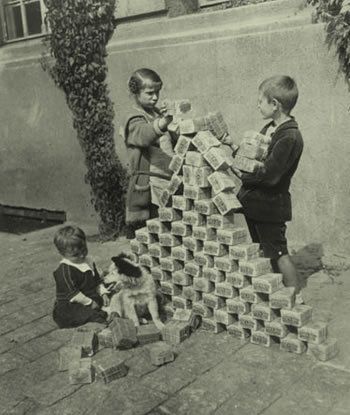
Should Soubry be correct that “hundreds of thousands of jobs will be lost” (knowingly by members of the Cabinet), then where will we stand when demand for jobs becomes even greater? Hundreds, maybe thousands may go for the same job, which means companies will have their pick. There will be less negotiation of contract terms because the need for a job will become so great. Should Parliament create new laws to reduce Worker’s rights, people will have no choice but to accept weak statutory contracts. Will the pound become worthless? Will the NHS still exist? What does a country look like after economic collapse? Look no further than Germany in the 1920’s.


Are we swapping our jobs, homes and futures for a political quest, to give more power to a government who would take away our rights?


Children playing with money, in Germany because it was worthless:

2ce449afaf3c16f8d226f71eade6e7b2--worthless-kids-playing

Snowflakes or Snowstorms?

“Snowflake”, the term coined by the far right to undermine the opinions of those who oppose them. Described by Cambridge Dictionary as “a way of referring to the type of young people to be too easily upset and offended”. Originating from the 1996 film “Fight Club”; a way of insulting liberals. The fragility of the snowflake, in its individuality makes it a seemingly ideal euphemism for humanitarian, leftie-liberals, who believe in the rule of law to protect a person from the extremities of the far-right. The term is used as both a form of prejudice and an attempt to undermine the opinions of those who disagree with them. It is perhaps synonymous with far-right tone in general; the boiling down of complex areas of law, society, trade and economic debate into simple catch-phrases like “taking back control”. However, what if a snowflake is more than a fragile piece of ice, that melts on the warmth of the skin?

The importance of this term is not in the fragility of the individual, but the power as a group. The derogatory impact on those who believe in the power of equality and truth, is insignificant. The snowflake is an individual product of a freezing harsh winter, of snow and ice. Alone it is just a snowflake, but thousands or even millions is a snowstorm. To use George R.R. Martin’s famous Stark phrase “winter is coming”. Of course, not the army of the dead, but those who oppose far right political agenda and what it leads to.

Is “snowflake” derogatory, or is it an element of something much bigger; more powerful, stronger than a single, falling snowflake? It represents uniqueness, kindness, and empathy. Together, a snowstorm through the power of our voice, our humanity and ability to understand. To look upon refugees entering a port on a boat, with the same eyes we do a neighbour who asks for help. It is not weakness to show kindness, but strength.

“Too easily upset and offended” is a correct definition of the term the far-right coined “snowflake”, but in context it is oversimplifying empathetic people. In the dystopian age of Trump, and the detached age of Brexit; too easily upset and offended is incorrect. Watching the persecution of immigrants crossing borders, living in a time where children are snatched from their parents and caged is not “too easily upset”. Trump’s “Muslim ban” is not an example of being “too easily…offended”. Farage, inaccurately blaming the EU in the “Breaking Point” poster, is not “too easily upset and offended”. These are people; mothers, brothers, sisters, doctors, teachers, and lawyers. These examples are typical fascist and far-right political agenda; to create fear and hate. The consequences of this rhetoric throughout history has resulted in oppression, war and genocide. And we are “too easily upset and offended”? Imagine it was your child taken and caged, would you not be offended? Imagine it was your child screaming for help, alone, scared, would you not be upset? Do the terms upset and offended still apply?

We are a snowstorm, and we are showing no signs of abating.


cropped-snowfall-201496_1280.jpg